Pitbull Myths! Understanding a misunderstood breed
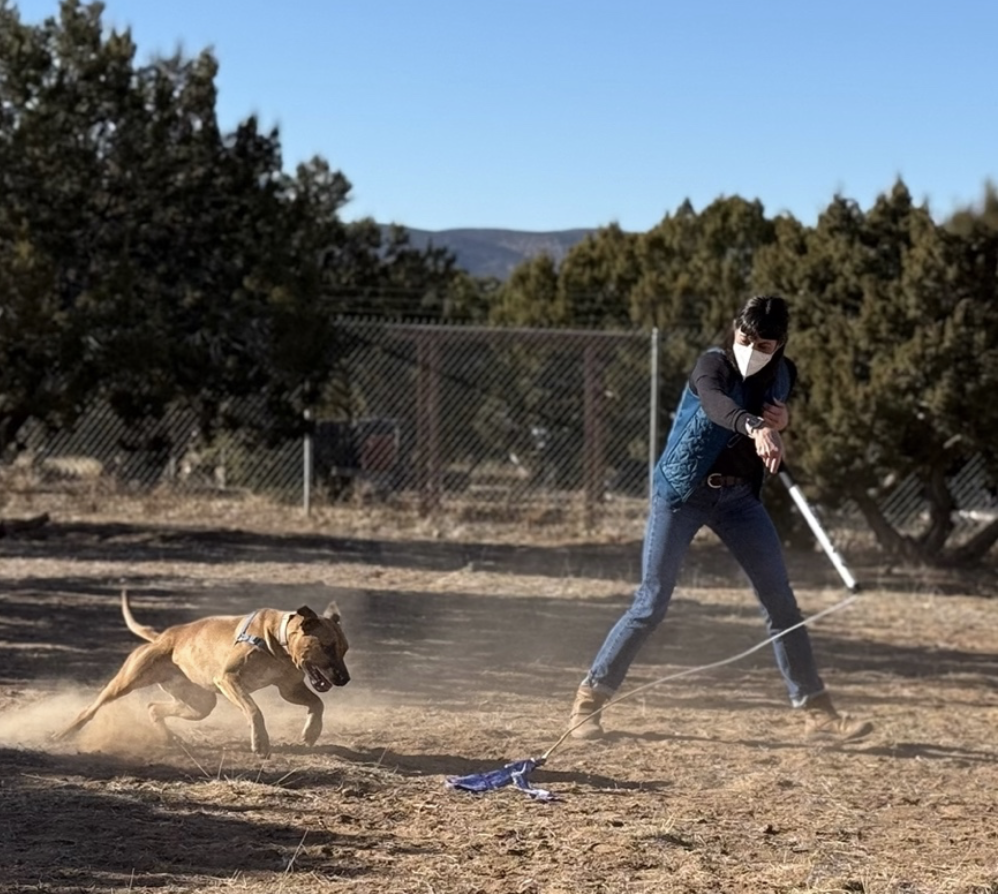
Marvin gets some exercise!
This was written by my colleague, Barbara Leighnor. Barbara is a trainer and volunteer liaison at the Santa Fe Humane center and shelter.
In this note I’ll break down some of the most common myths about pitbull-type dogs. As a reminder, “pitbull” is not actually a breed, but a label used to describe up to twenty different blocky-headed breeds. Don't forget to check out the exciting opportunities coming up. Now let’s get into debunking some myths!
Pitbulls have locking jaws
Many breeds within the “pitbull” label, as with terriers as a group, were bred for tenacity, gameness, and an unwillingness to release what they are holding with their mouths, traits which have led to the common misconception that pitbulls have a locking jaw. No breed has any structure or mechanism that allows their jaws to lock – it simply doesn’t exist. Further, while many pitbull-type dogs have powerful bites, they don’t even rank at the top of the list for bite strength.
Pitbulls are stubborn/untrainable
All animals, including us, learn using the same principles, doing more of what “works” for them and less of what doesn’t (or causes pain or fear). If a dog seems “untrainable” it has nothing to do with ability and everything to do with motivation, so the task falls to us to find rewards that seem worth the dog’s effort. For most dogs, food is good enough, but other dogs may be more motivated by toys or access to social interactions. For extremely biddable breeds, like Border Collies, the training itself is often the reward.
Pitbulls will attack unprovoked
Barring any neurological conditions, all dogs will signal their discomfort in some manner. Sometimes these signals can be subtle and some individuals will move through signals faster than others, but this is unrelated to breed. In most cases, bites may appear unprovoked because we humans missed the signals. It’s worth noting that dogs who have been punished for using normal signals that make us humans uncomfortable, like growling or flashing teeth, may skip those signals in the future.
Pitbulls are nanny dogs
This misconception was actually popularized by bully breed advocates but may do more harm than good. The nanny dog concept largely stems from the popularity of “pitbulls” as farm and family dogs in the early 20th century because of their stable temperament, affectionate nature, and protectiveness. During this time, pitbulls were widely known as America’s Dog. In fact, Theodore Roosevelt and Helen Keller both had beloved pitbulls and Petey, from Little Rascals, was an American Staffordshire Terrier.
To this day, many “pitbulls” serve as therapy dogs, service animals, and ambassadors for their breed. And while they do make wonderful family dogs, no dog should ever be left unattended with children. Even the most well-behaved and loving dog, regardless of breed, can make poor choices or accidentally injure someone when overexcited.
Pitbulls are inherently dangerous
This misconception is largely due to issues with dog bite statistics, media biases, and the dog-fighting history of many pitbull-type breeds. Most dog bites go unreported unless medical attention is sought (more likely with larger breeds) and, in many cases, breed cannot be determined, leading to misrepresentation in reported bites. Studies have shown that breed tends to be a poor predictor of aggression and even when differences were found, “pitbulls” were found to be lower in human-directed aggression than other breeds, such as Dachshunds and Chihuahuas.
Pitbulls consistently score higher than many other common breeds, including Golden Retrievers, in temperament tests and although individuals within this breed group can be dog-selective, this is unrelated to human-directed aggression. As grim as it sounds, human-directed aggression is not tolerated even among people engaged in illegal dog fighting as it poses a liability. Any fighting dog who demonstrates human-directed aggression is usually culled, effectively removing those genes from the pool.
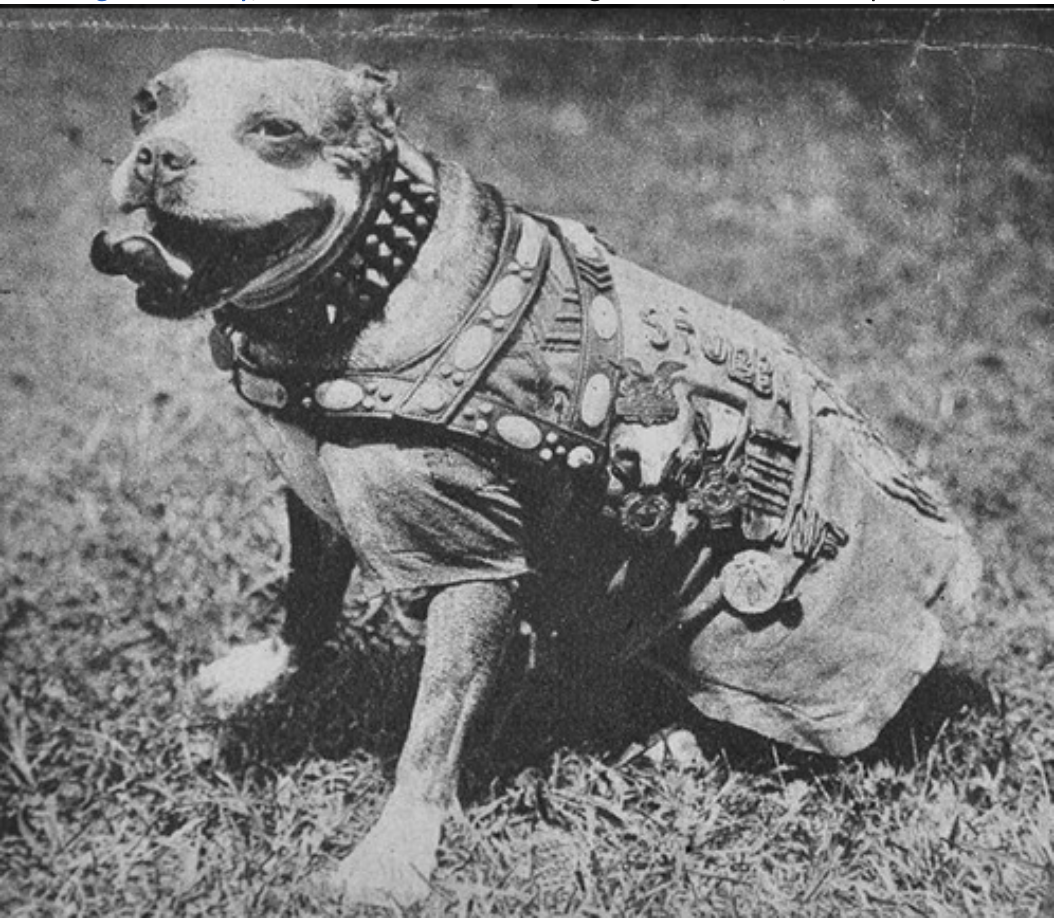
Sergeant Stubby, the most decorated war dog of World War I, was a pitbull mix
The reality is that pitbull-type dogs, as a group, are neither villains nor heroes. They are dogs, just like dogs in any other breed. We must always consider the individual in front of us as being shaped by their genetics, past and current environment, and learning history.
Do you find yourself holding on to any myths? Check out the following websites for more information, including statistics and data on bites and breed specific legislation: Pitbull Hero, National Canine Research Council, and The Hansel Foundation.