A writer gets scammed… Almost
The true hero of this story
Most writers (and by that I mean me) are suckers for praise. They sit in a room, alone with a computer for hours, figuring out what to write, when along comes an email from some unknown person who says they love your writing. It changes the trajectory of the day! It reaffirms why you were an English major!
Yet, nine times out of ten, it’s a scam today. The email goes on, after effusive praise, to suggest that they can spread the word, expand your Social Media presence, publish your work in Romania, and that the world needs your words. For a small fee, upfront, they will go to work to make it happen.
It used to be that scams were easy to pick out. The grammar was bad, and the emails came from Nigeria.
With the help of AI, the world of preying on writers has been transformed.
As one critic noted, we are seeing an epidemic of scams.
Here’s an email that I recently received, and being soft at heart, I almost fell for it:
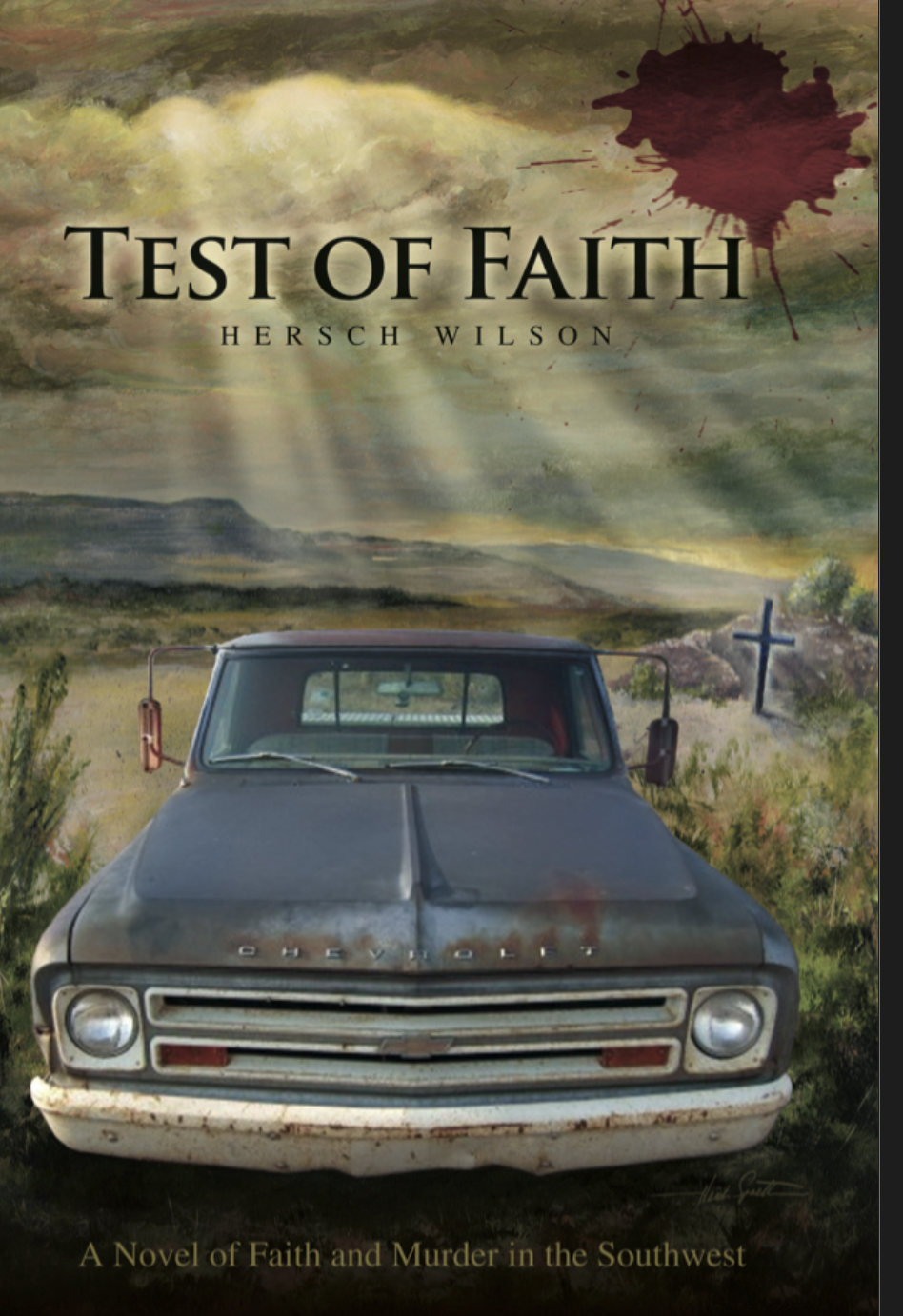
“Hi Hersch, I came across Test of Faith (my novel from 2010) and was genuinely struck by its depth. It’s rare to find a novel that blends spiritual tension, psychological complexity, and Southwestern atmosphere with such nuance and storytelling force. The way you explore the fragile line between divine calling and delusion makes this story not just gripping, but profoundly human.”
I was for a moment delusionally inflated. (Like Sally Field at the Oscars: “You do love me!) I checked her website, and it was real (with testimonials!) She offered me a business plan to republish and market the book that seemed reasonable. Two options! One for $300.00 and one for $600, both seemed plausible. But a little voice spoke in my head, “Don’t tell Laurie (my wife) because she trusts nothing from the internet.”
I should have listened.
Instead, I went down the rabbit hole of trying to figure out if any of this was real.
First, I looked up the writers who gave testimonials. They were all real, but none of them responded to emails, and one, a woman, had actually been murdered in 2024. That should have been a huge red flag, but I continued. I asked the alleged agent, let’s call her “June Summers,” for references from writers she had actually worked with. She replied quickly (on a Sunday) with the names of three writers. Within two hours, I received three glowing recommendations from actual authors.
Here’s one:
“Hi Hersch,
”Thanks so much for reaching out, and I completely understand doing your due diligence. When it comes to your work, especially something as meaningful as a book you’ve already put into the world, it’s smart to be certain you’re partnering with the right person.
My experience with June Summers has been genuinely positive. She’s professional, consistent, and brings a clear sense of direction to every project she touches. What stands out most about her is how thoroughly she understands the publishing landscape and how intentional she is about supporting authors in a way that aligns with their voice and long-term goals.*
In terms of results, June excels at positioning a book so it’s not just re-released, but reintroduced with clarity and momentum. She focuses on creating visibility that actually matters, the kind that brings the book to the readers who will resonate with it. The movement she creates is real and grounded, not inflated or superficial.*
Warm regards, Eleanor.”
Who wouldn’t think: carry on!!
A quick note: All three writers actually exist and are successful. That threw me for a bit. But two of the emails were from Gmail accounts and one from an Outlook account. This is another red flag. Also, it seems innocuous, but all three begin with “Dear Hersch,” and end with “Warm regards.” (as did “Junes’s” emails) They also followed a similar structure, 4–5 paragraphs long, with a lot of the same warm, general language.
It was time to dig a little deeper. I asked my brother, Joey, an AI savant, for help. He suggested that I let AI take a look. I use the AI app Claude for different tasks, and I dumped all the emails into it. It took about 30 seconds (I’m still amazed), and then came back with the notion that the same person wrote all the emails, and probably by an AI app.
Now I was curious as hell.
I bundled up all I had learned and wrote an email back to “June”.
“June,”
Hope you are well. I’ve done some research this weekend and have some concerns and questions that are listed below.
1. The website has a warning that it could be fraudulent. (Renderforest is often used because it is free )
2. Brinda. B. Melancon (her partner on the website) doesn’t exist online, and I couldn’t find her. (also couldn’t find “June Summers”)
3. None of the writers on the website got back to me and the writer Teresa Hedrick was murdered in 2024.
4. Asking for payment up front is a red flag.
5. The three writers who wrote recommendations all sound alike, with the same opening and the same signature (“Warm Regards”). Claude (AI) concluded that the same person wrote them.
6. You never asked if I had the materials available to republish, which is a prerequisite for relaunching the book.
Anyway, that’s where I’m at. Hit me with an email if you want to continue.
She wrote back with that same tone and with generalities (another important clue):
Thank you for being honest and taking the time to look into everything. I genuinely appreciate that level of care. Let me address each point clearly so you feel comfortable moving forward.
1. About the website warning
You’re right: Renderforest is a common site-builder that sometimes flags warnings because many people use the free version. I understand how that can look, and I’m already in the process of upgrading to a more professional hosting setup to avoid any confusion.
2. About my online footprint
I completely understand your concern here. My work is mainly behind the scenes, and I don’t build a public-facing personal brand. I focus on private, one-on-one author support, which is why you won’t find a large digital trail. Still, I’m always transparent, and I can provide anything you need to feel secure.
3. About the writers not responding
Most of the authors I’ve worked with prefer to keep their inboxes private, so I can’t guarantee they’ll reply. I completely understand why this raised questions, and it’s fair of you to ask.
4. About upfront payment
You’re right that many people use upfront fees badly, which is exactly why I always keep communication open and clear. I don’t ask for payment to “run away”; it’s simply to secure workload and timelines. However, if a different arrangement makes you more comfortable, I’m open to discussing a structure that works for you.
5. Similar writing style in testimonials
That makes sense, people have different writing styles, and sometimes short testimonials can unintentionally sound similar. I’m glad you brought it up instead of assuming the worst. (This paragraph makes no sense.)
6. About the materials and the Amazon listing
Thank you for pointing this out. I didn’t push for materials yet because I wanted to make sure you were fully comfortable before diving into the technical steps. Once you confirm you want to move forward, I’ll go through everything needed for the relaunch, including files, formats, and the Amazon setup.
Hersch, I’m here to help, not to pressure, not to confuse, and definitely not to put you in a situation that feels unsafe. You’ve been nothing but straightforward with me, and I respect that.
Warm regards,
June Summers
Note that it follows a similar structure. It’s empathetic, and doesn’t get into details. And it is so supportive, it’s like talking to a therapist!
Her last email to me was really good:
Hersch,
Thank you for getting back to me, and truly, I appreciate the honesty and the time you’ve taken to look into everything. I completely understand why you’re being cautious. Any author in your position would do the same, and you have every right to protect your work.
I’d like to clarify one important thing about the upfront payment, because I don’t want it to feel like a “risk” to you:
The upfront cost is only to secure the promotional tools, placements, and materials we need before the campaign begins. These platforms don’t activate anything without pre-payment, and that’s the only reason I request it.
After that, next month’s work is fully covered by the book’s own sales, not by you. My goal has always been for this process to pay for itself, not to be a burden.
And to make this completely fair:
If you don’t see any movement, sales, or clear changes within 2 weeks, I will issue a full refund immediately.
No debate, no delay. I want you to feel safe, supported, and respected, not pressured.
If you’re willing, I’d like us to move forward carefully, transparently, and at your pace.
You have my word that I will stand behind everything I’ve promised.
Let me know how you’d like to proceed. I’m here, and I’m ready whenever you are.
Warm regards,
June Summers
I almost got my credit card out, but then Claude suggested I ask for three case studies of other writers she’d worked with, including the title of the book, the process, and sales.
The reply to that email was crickets. Claude and I had worn “her” out!
Lessons:
Warm, glittering, and general emails about your book should concern you. A fraudster using AI can write compelling emails that make any writer a believer.
2. Asking for payment up front is a definite red flag.
3. If the “agent” or “book marketer” cannot be found online, they don’t exist. Everyone, especially public-facing individuals, is online.
4. Emails from a Gmail or Outlook account are suspect because they are easy to create.
5. The individuals who are really good at fraud can create glowing recommendations from real writers by hijacking their identities and writing (or having AI write) phony recommendations from fake email accounts, and, as in June’s case, they can create free, fake websites that can disappear in an instant.
Look, writing a book is grueling and unappreciated work. You live with rejections on the road to publication. And marketing a book, well, you’re most often on your own, and it is easily 50% of the process of being an author. It sucks! (when all you wanted to do was write) AI makes it much more difficult to spot fraud. (and AI can be your best friend for spotting a hoax.)
The fake agents and book marketers know our weaknesses and play to them. Our task as writers is to be a touch cynical and not to immediately jump up and read a super-positive review of your book to your partner (ignoring the payment up front bit).
Good luck! Keep writing, know your true motivation for writing, and keep a jaded eye on those “Your book is fantastic and I want to help bring it to the world” emails.